By: Jeff Hirz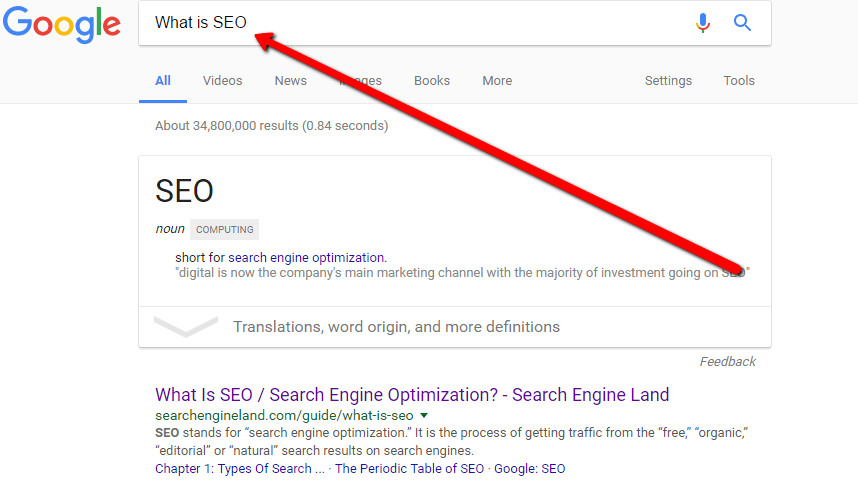
SEO terms can make a normal marketing conversation feel like a technical handoff. If you’re working with an SEO agency, hiring one, or trying to understand a report from your internal team, the vocabulary matters because it tells you what is being fixed, measured, or protected.
This SEO glossary explains the key SEO terms you’re most likely to hear in an audit, strategy call, Google Search Console review, or monthly performance report. Some definitions are beginner-friendly. Others cover newer search concepts like AI Overviews, Core Web Vitals, and GEO, because those terms now show up in real SEO conversations.
What Is SEO?
SEO stands for search engine optimization. SEO is the practice of improving a website so search engines can crawl, understand, index, and rank its pages, while users can find the right page for the problem they are trying to solve. Google Search Central’s SEO Starter Guide frames SEO around helping search engines understand your content and helping users decide whether to visit.
For a deeper primer, see our guide to what SEO is and how it works, or review how OuterBox approaches SEO services.
Quick SEO Terms By Category
Use this section as a quick SEO vocabulary map before jumping into the full glossary below.
| Category | Common Terms |
|---|---|
| Technical SEO | crawl, indexing, canonical tag, robots.txt, noindex, Core Web Vitals, JavaScript SEO |
| Content and On-Page SEO | H1, title tag, meta description, search intent, helpful content, topical authority |
| Links and Authority | anchor text, inbound link, internal link, nofollow, PageRank, quality link |
| Analytics and Reporting | GA4, Google Search Console, CTR, conversion, keyword not provided |
| Search Results | SERP, featured snippet, rich results, zero-click search |
| AI Search | AI Overview, AI Mode, GEO / AI search optimization |
301 Redirect Or Redirection
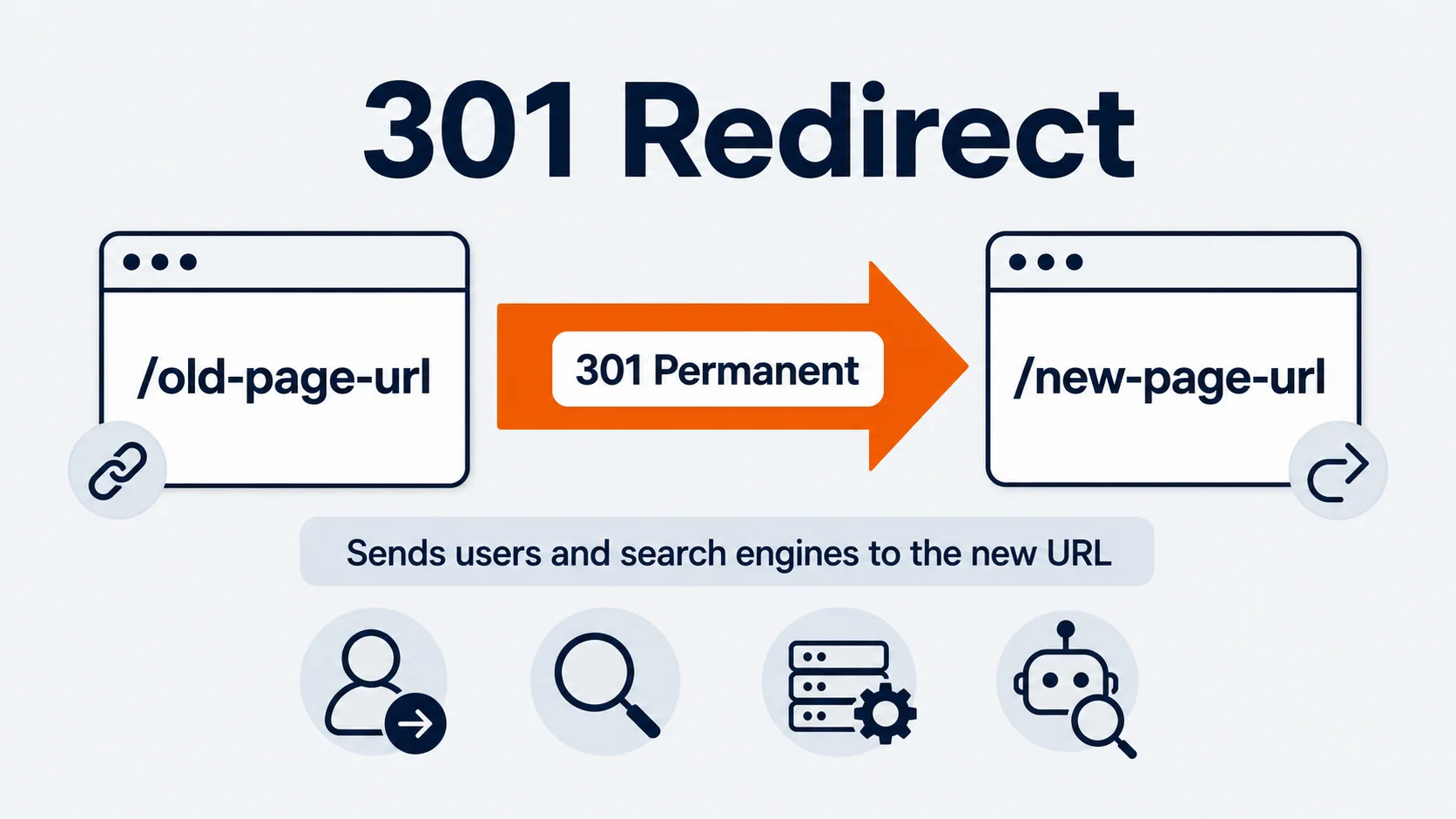
A 301 redirect sends users and search engines from one URL to another permanent URL. SEO teams use 301 redirects when a page is deleted, merged, moved, or replaced. A clean redirect helps preserve user experience and reduces the chance that old backlinks point to dead pages.
404 Not Found

A 404 Not Found error appears when a requested URL does not exist. A few 404s are normal on most websites, but important deleted pages should usually be redirected to the closest relevant page. A 404 becomes an SEO problem when valuable links, rankings, or users hit a dead end.
AI Mode
AI Mode is Google’s AI-powered search experience for more exploratory, multi-step, or comparison-heavy queries. For site owners, the practical SEO takeaway is simple: the same foundations still matter. Pages need to be crawlable, indexable, useful, text-accessible, and clear enough to be cited or linked as supporting sources.
AI Overview
An AI Overview is an AI-generated summary that can appear in Google Search for certain queries. Google’s AI features guidance says AI Overviews and AI Mode use normal Search eligibility, and no special schema or separate AI text file is required. Search Console reports this traffic inside the Web search type.
Algorithm
An algorithm is a set of calculations and rules used to process information. In SEO, people usually mean Google’s ranking systems, which evaluate signals such as relevance, quality, usability, links, freshness, and search intent to decide which pages appear for a query.
Alt Text / Alt Tag
Alt text describes an image for screen readers and search engines. Good alt text explains what the image shows in plain language. If a keyword fits naturally, use it, but accessibility comes first. Stuffed or vague alt text does not help users and can weaken page quality.
Analytics
Analytics is the collection and interpretation of website data. In SEO, analytics usually covers traffic, users, revenue, traffic sources, conversions, engagement, and behavior patterns. Google Analytics 4 is the common reporting platform, but Search Console, CRM data, and call tracking often complete the story.
Anchor Text
Anchor text is the clickable text inside a link. Search engines use anchor text as one clue about the linked page’s topic. Natural anchor text describes the destination without forcing a keyword into every link. For example, “internal link building” is clearer than “click here.”
Black Hat SEO
Black hat SEO refers to tactics that violate search engine policies or manipulate rankings without helping users. Examples include cloaking, hidden text, keyword stuffing, spam link building, and automated low-value content. Black hat tactics can lead to ranking loss, manual actions, or deindexing.
Branded Keywords
Branded keywords include the name of a company, product, service line, or branded phrase. “OuterBox SEO services” is a branded keyword. Branded queries matter because they show demand from people who already know the business or are comparing it with other options.
Canonical Tag
A canonical tag is HTML that tells search engines which URL is the preferred version of a page when similar or duplicate versions exist. Canonical tags are useful for filtered URLs, tracking parameters, duplicate product pages, and syndicated content. They are a signal, not a command, so the page still needs clean internal links and consistent technical setup.
Click Through Rate / CTR
Click through rate, or CTR, is the percentage of people who click a result after seeing it. In SEO, CTR often points to title tag, meta description, brand recognition, and search-result fit. A page can rank well and still underperform if the snippet does not match the searcher’s need.
Content Management System / CMS
A content management system, or CMS, is software used to create and manage website content. WordPress, Shopify, Magento, BigCommerce, and Drupal are common examples. For SEO, a CMS matters because it controls templates, URL rules, metadata, internal links, media, redirects, and sometimes structured data.
Conversion
A conversion happens when a user completes a meaningful action on a website. Conversions can include buying a product, submitting a form, calling a business, signing up for a newsletter, registering for a webinar, or requesting a quote. SEO is stronger when rankings connect to conversions, not just traffic.
Core Web Vitals
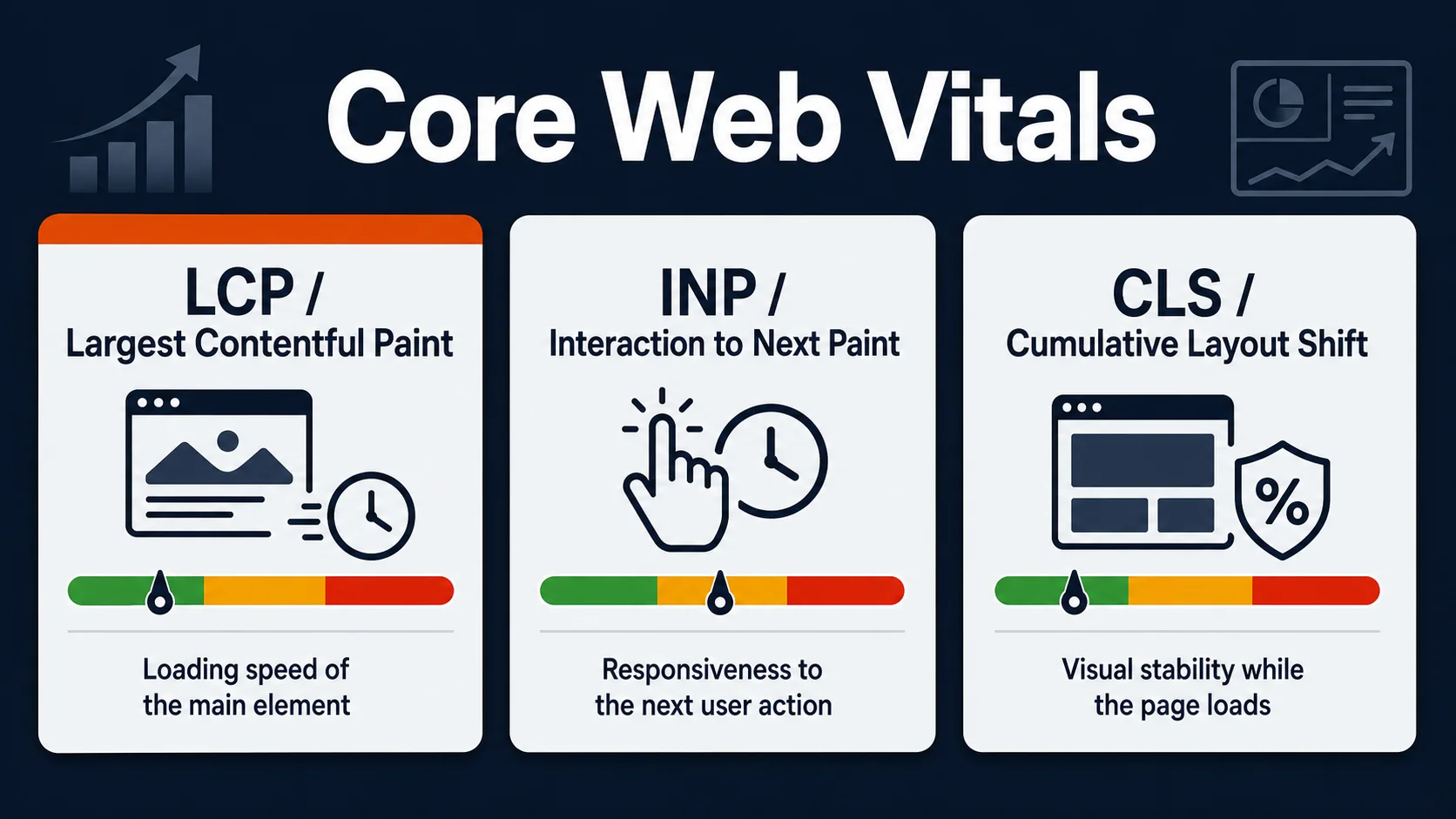
Core Web Vitals are Google page experience metrics that measure loading speed, responsiveness, and visual stability. The current set includes Largest Contentful Paint, Interaction to Next Paint, and Cumulative Layout Shift. Core Web Vitals do not replace content quality, but they help teams diagnose user experience problems that can affect search performance.
See our article on Core Web Vitals for a deeper breakdown.
Crawl
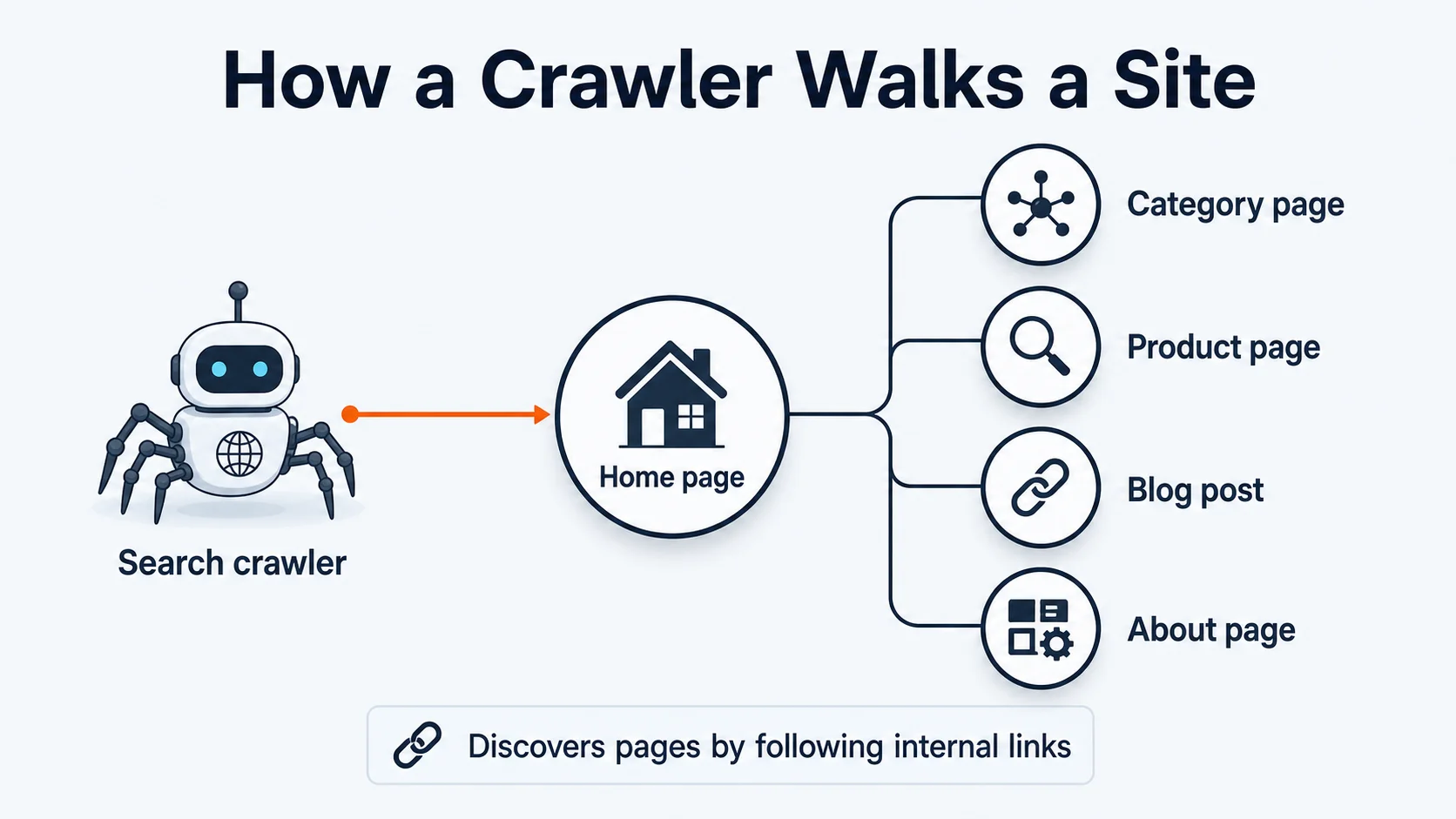
Crawling is the process search engines use to discover URLs and fetch page resources. Googlebot is Google’s main crawler. SEO teams also crawl websites with tools to find status codes, titles, meta descriptions, broken links, canonical tags, duplicate pages, and other technical issues.
Crawl Budget
Crawl budget refers to the attention and resources a search engine spends crawling a site. Small sites usually do not need to worry about it. Large eCommerce, publisher, and faceted-navigation sites do, because millions of duplicate or low-value URLs can keep crawlers away from the pages that should rank.
CSS
CSS stands for Cascading Style Sheets. CSS controls how HTML looks on a page, including layout, spacing, colors, fonts, and responsive behavior. CSS can affect SEO indirectly when it hides important content, slows the page, breaks mobile layouts, or makes content hard to use.
Dead Link
A dead link is a link that points to a page that no longer works. It may return a 404, 500, 403, timeout, or another error. Dead links hurt user experience and can waste internal link equity, especially when important navigation, article, or product links break.
Disavow
Disavow is the process of telling Google to ignore certain backlinks. It is used carefully, usually when a site has a history of spammy links, manual link actions, or risky link-building activity. Most sites should not disavow links casually, because removing valid link signals can create its own problem.
Duplicate Content
Duplicate content is content that appears in the same or very similar form on more than one URL. Duplicate content can happen through faceted navigation, printer pages, tracking parameters, copied descriptions, syndicated content, or multiple URL versions. Canonicals, redirects, better templates, and original content often solve it.
Dynamic Tags
Dynamic tags are placeholder-based rules that generate titles, meta descriptions, headings, or other page elements automatically. They can help large sites create unique metadata at scale. They can also create thin, repetitive, or awkward snippets if the rule is not written and tested carefully.
E-E-A-T
E-E-A-T stands for Experience, Expertise, Authoritativeness, and Trustworthiness. It is part of Google’s quality-rater vocabulary, not a single ranking score. SEO teams use E-E-A-T as a useful lens for authorship, sourcing, first-hand experience, brand credibility, and whether a page deserves trust.
eCommerce SEO
eCommerce SEO is search engine optimization for online stores. It often focuses on category pages, product pages, faceted navigation, product content, internal links, schema, merchant data, and indexation control. Strong eCommerce SEO helps shoppers find products through non-branded and branded searches.
Featured Snippet
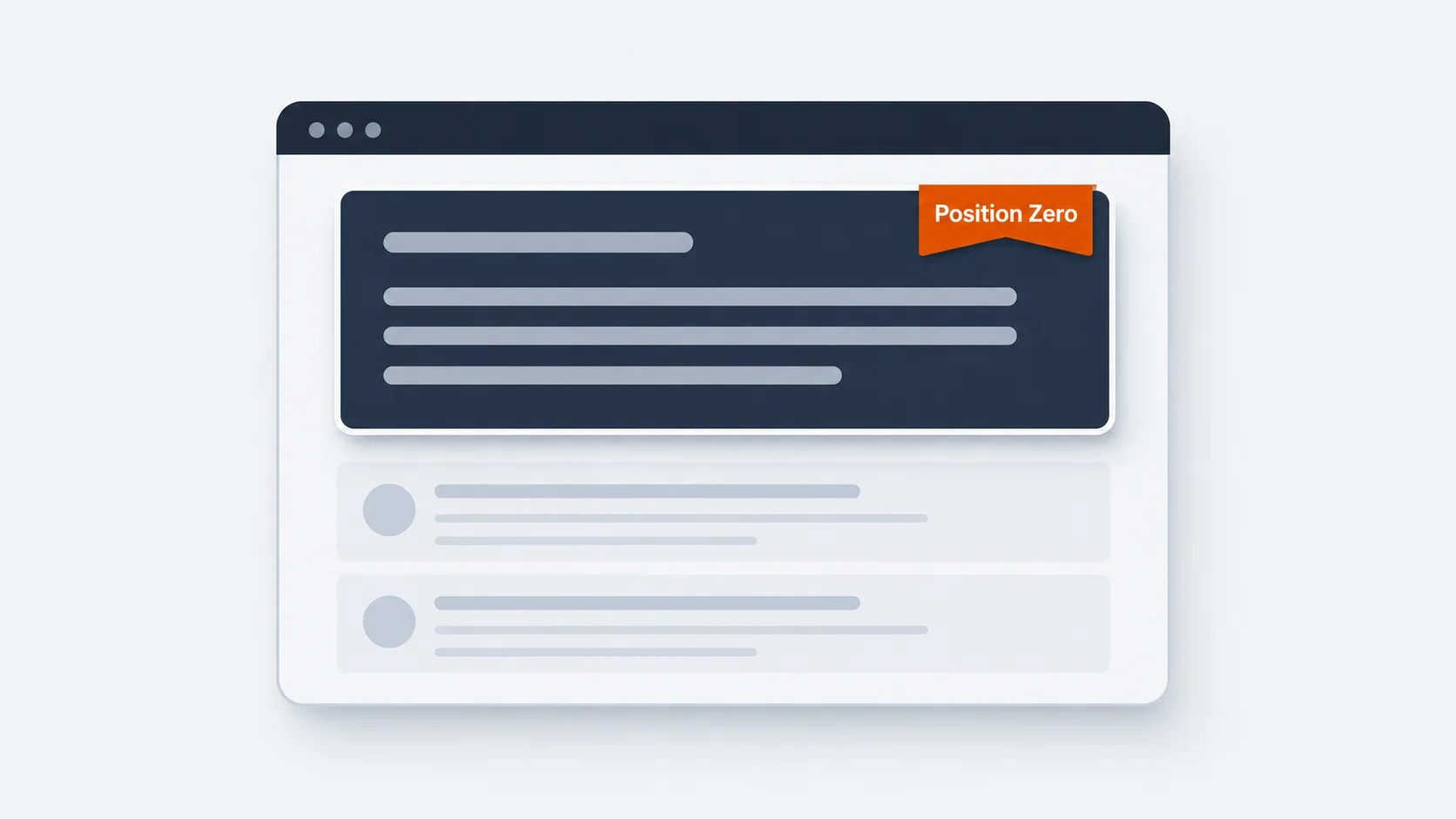
A featured snippet is a highlighted answer that Google may show above or near standard organic results. Featured snippets often pull a paragraph, list, table, or definition from a page. Clear headings and direct answers improve eligibility, but Google decides when and where a snippet appears.
Fresh Content
Fresh content is content that is updated or expanded when the topic changes. Freshness does not mean changing dates for appearance. A useful refresh fixes stale information, adds new examples, removes outdated claims, and keeps the page aligned with how people search now.
FTP
FTP stands for File Transfer Protocol. It is used to transfer files between computers and servers. FTP is less central to modern SEO than CMS and hosting workflows, but teams may still mention it when discussing file access, redirects, server assets, or legacy websites.
GA4
GA4 is short for Google Analytics 4, the current version of Google Analytics. GA4 tracks users, events, sessions, traffic sources, engagement, conversions, revenue, and campaign performance. SEO reports often pair GA4 with Search Console because GA4 shows onsite behavior while Search Console shows search visibility.
GEO / AI Search Optimization
GEO, sometimes called generative engine optimization or AI search optimization, is the work of making content clear, credible, technically accessible, and easy for AI search systems to understand and cite. It does not replace SEO. It extends the same fundamentals into AI-assisted search experiences.
For more context, read our article on AI search optimization.
Google Analytics
Google Analytics is a reporting platform that helps marketers understand website traffic and user behavior. SEO teams use it to review organic sessions, engaged sessions, conversions, revenue, landing pages, and assisted performance. Analytics tells you what users do after they arrive from search.
Google Search Console
Google Search Console is a free Google tool for monitoring organic search visibility. It reports clicks, impressions, average position, CTR, indexed pages, crawl and indexing issues, Core Web Vitals, structured data enhancements, and manual actions. Google’s Search technical requirements are a useful companion because Search Console is usually the first place to verify how Google sees a page.
Googlebot
Googlebot is Google’s web crawler. It discovers URLs, fetches page resources, and sends information back to Google’s indexing systems. If Googlebot cannot access important content because of server errors, blocked resources, broken links, or rendering problems, the page may struggle to appear correctly in search.
H1
An H1 is the main heading on a page. It should clearly describe the page’s topic and usually include the primary keyword or a close variant. The H1 does not need to match the title tag exactly, but both should point to the same search intent.
Helpful Content
Helpful content is content created for users rather than content created only to capture rankings. A helpful page answers the query clearly, shows real knowledge, uses accurate sourcing, and avoids filler. For SEO, helpful content is not a slogan. It is a quality standard.
HTML
HTML stands for Hypertext Markup Language. It is the markup used to structure webpages with headings, paragraphs, links, images, lists, tables, and other elements. Clean HTML helps browsers, assistive technology, and search engines understand what is on the page.
Inbound Link
An inbound link is a link from another website to your website. It is also called a backlink. Inbound links can help search engines discover pages and evaluate authority, especially when the linking page is relevant, trusted, and naturally connected to your topic.
Indexing
Indexing is the process of storing page information in a search engine’s index. A page must usually be crawled before it can be indexed, but crawling does not guarantee indexing. Google can choose not to index thin, duplicate, blocked, low-quality, or technically problematic pages.
INP
INP stands for Interaction to Next Paint. It is a Core Web Vitals metric that measures how quickly a page responds to user interactions such as clicks, taps, and keyboard input. INP replaced First Input Delay as Google’s responsiveness metric.
Internal Link
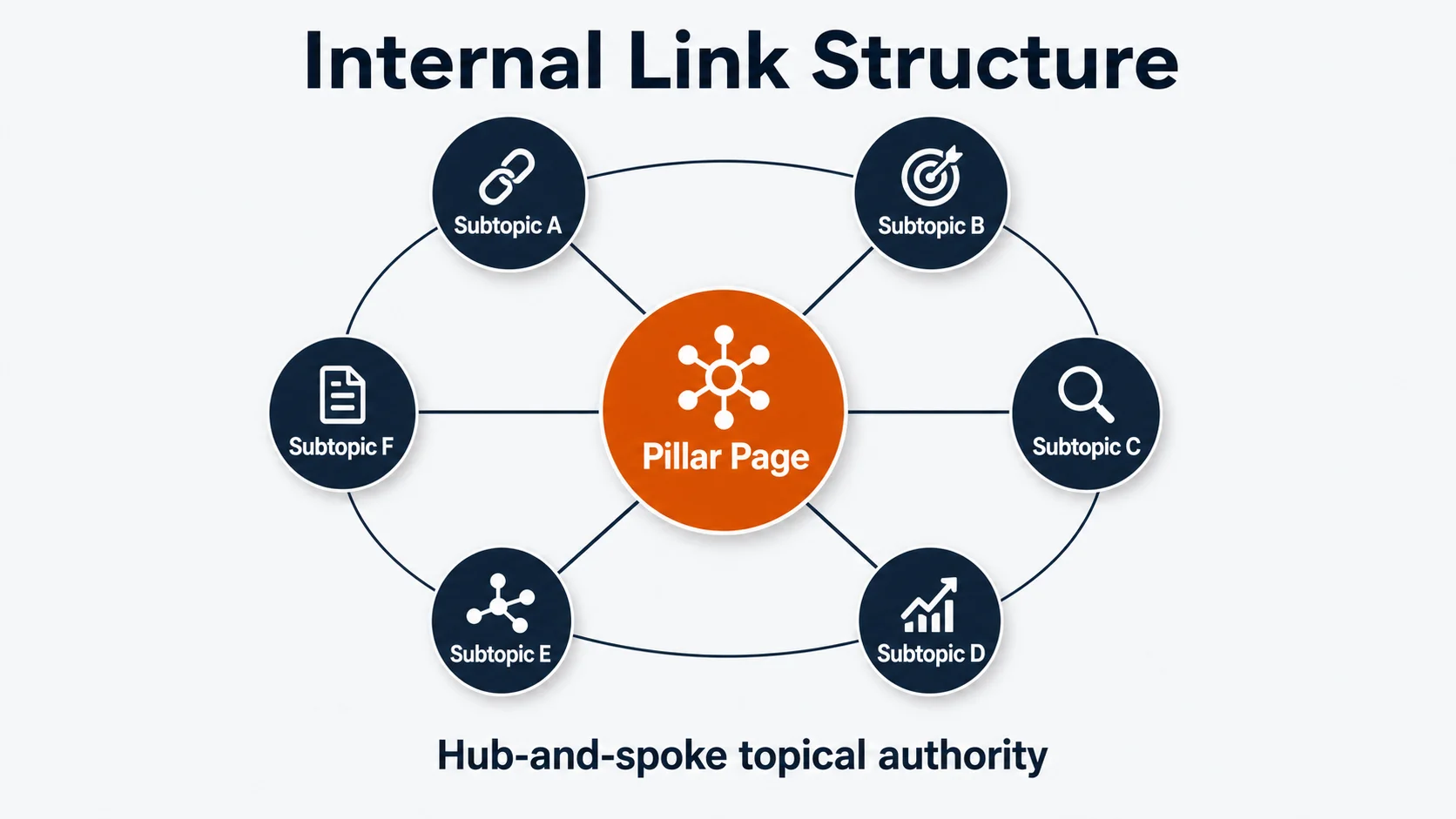
An internal link points from one page on your site to another page on the same site. Internal links help users move through related content and help search engines understand page relationships. A strong internal link building plan uses descriptive anchors and sends authority to important pages.
IP Address
An IP address is a unique number assigned to a device or server on a network. In SEO, IP addresses can matter during hosting migrations, server troubleshooting, bot analysis, log-file review, and spam investigations. Most everyday SEO decisions do not depend on IP addresses.
JavaScript SEO
JavaScript SEO is the work of making JavaScript-powered content crawlable, renderable, and indexable. It matters when navigation, product listings, links, copy, metadata, or structured data depend on client-side rendering. If search engines cannot render the content, they may miss what users see.
Keyword Not Provided
Keyword not provided refers to organic keyword data that is hidden in Google Analytics because of privacy and logged-in search behavior. SEO teams use Search Console, rank tracking, landing-page analysis, and paid-search data to fill the gap that Analytics no longer shows directly.
Keyword Research
Keyword research is the process of finding the queries people use when searching for information, products, services, or brands. Good keyword research studies search volume, difficulty, intent, SERP format, competitor pages, and business value. It should guide page targeting, not force awkward language.
Keyword Stuffing
Keyword stuffing is the practice of repeating keywords unnaturally to manipulate rankings. It can appear in body copy, headings, alt text, internal links, metadata, or hidden text. Modern SEO uses keywords to clarify relevance, not to overwhelm the reader.
Landing Page
A landing page is a page built for a specific audience, query, campaign, or offer. In SEO, a landing page often targets a distinct search intent and gives users a clear next step. A strong landing page aligns the query, heading, copy, proof, and call to action.
Link Building
Link building is the process of earning links from other websites. Strong link building focuses on relevance, quality, and real reasons for another site to cite yours. Weak link building chases volume through directories, spam, paid schemes, or low-value placements.
Manual Penalty
A manual penalty is better called a manual action. It happens when a human reviewer at Google determines that a site violates spam policies. Manual actions can affect parts of a site or the entire site, and they usually require cleanup plus a reconsideration request.
Meta Description
A meta description is HTML that summarizes a page for search engines and users. Google may use it as the search-result snippet, though it can rewrite snippets based on the query. A good meta description is specific, accurate, and written for the decision to click.
Nofollow
Nofollow is a link attribute that tells search engines not to treat a link as a normal endorsement. Google treats nofollow as a hint. It is commonly used for certain paid, user-generated, untrusted, or non-editorial links, often alongside `sponsored` or `ugc` attributes when appropriate.
Noindex
Noindex is a directive that tells search engines not to include a page in search results. Unlike robots.txt, noindex is an indexing control. Search engines generally need to crawl the page to see the noindex tag, so blocking the URL in robots.txt can prevent them from seeing it.
Organic Search Results
Organic search results are unpaid listings that appear because a search engine considers them relevant to the query. Organic results can include standard blue links, rich results, images, videos, local results, and other search features depending on the query.
Outbound Link
An outbound link points from your website to another website. Outbound links can help users verify sources, explore related topics, or reach a cited tool. SEO teams watch outbound links for quality, relevance, crawl waste, and broken destinations.
PageRank
PageRank was Google’s original link-based scoring system and later a public toolbar metric from 0 to 10. The public score is gone, but the underlying idea still matters: links can pass authority, and links from relevant, trusted pages tend to be more valuable than random links.
Panda
Panda was a Google algorithm update first released in 2011 that targeted thin, low-quality, and low-value content. The update is historical, but the lesson is current: pages built mainly to fill search results, duplicate other pages, or say very little can put organic performance at risk.
Penguin
Penguin was a Google algorithm update launched in 2012 that targeted manipulative link practices. The update is historical, but the core lesson still applies: unnatural link patterns, spam links, and over-optimized anchor text can hurt trust rather than build it.
Quality Content
Quality content answers the searcher’s need with accuracy, clarity, and enough depth for the topic. For SEO, quality content also has a clear page purpose, useful structure, original perspective where possible, and metadata that matches the page. It is written for users first.
Quality Link
A quality link is a link from a relevant, trusted, and contextually useful page. Quality links are usually earned because the linked page is worth citing. A link from a strong page in a related industry can matter more than dozens of weak links from unrelated sites.
Rich Results
Rich results are enhanced Google Search listings that can show extra information, such as ratings, product details, FAQ-style fields, event details, breadcrumbs, or images. Eligibility usually depends on valid structured data and whether Google supports that result type for the page.
Robots.txt File
A robots.txt file tells crawlers which URLs or folders they can request. Google’s robots.txt documentation describes it as a crawl-management tool, not a privacy tool and not a dependable way to remove pages from search results. To keep a page out of Google, use noindex or another index-control method.
Schema
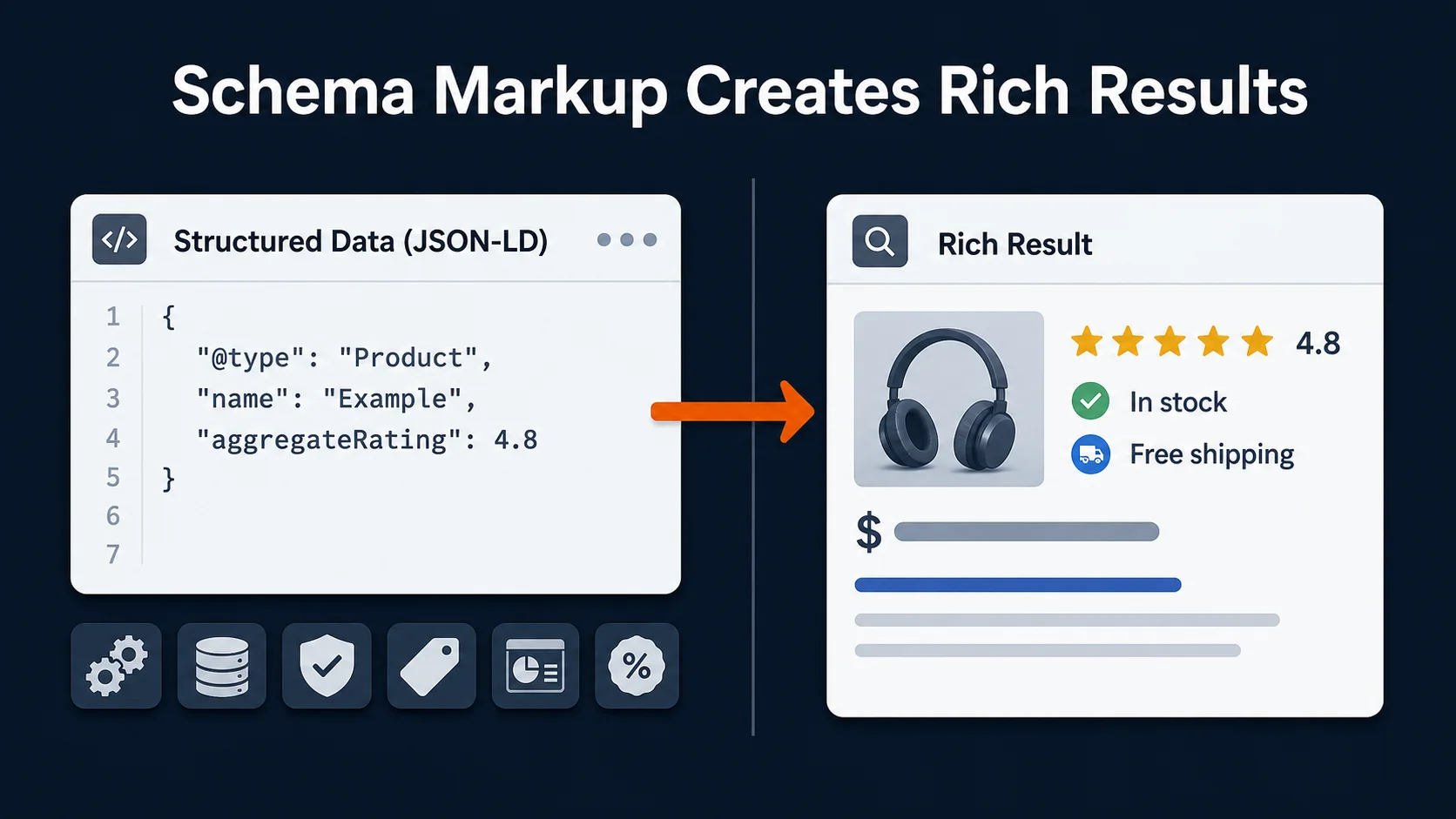
Schema is a shared vocabulary for describing page information in a machine-readable way. SEO teams usually mean schema.org structured data implemented in JSON-LD. Schema can help search engines understand entities, products, organizations, breadcrumbs, articles, FAQs, and other page elements.
Search Engine
A search engine is a system that discovers, stores, ranks, and returns information from the web or another collection of documents. Google, Bing, and other search engines use crawlers, indexes, and ranking systems to match results to a search query.
Search Intent
Search intent is what the searcher is trying to accomplish. A query can be informational, commercial, transactional, navigational, local, or mixed. Matching search intent matters because a page that answers the wrong need can rank poorly even when it uses the right keyword.
Search Query
A search query is the word or phrase someone types or speaks into a search engine. A keyword is the SEO team’s label for a target query or group of related queries. Query data helps teams understand demand, language, seasonality, and user problems.
SEM
SEM stands for search engine marketing. The term can refer broadly to marketing through search engines, but many teams use it to mean paid search advertising. SEO covers unpaid organic visibility, while PPC covers paid placements. Some strategies use both together.
SERP
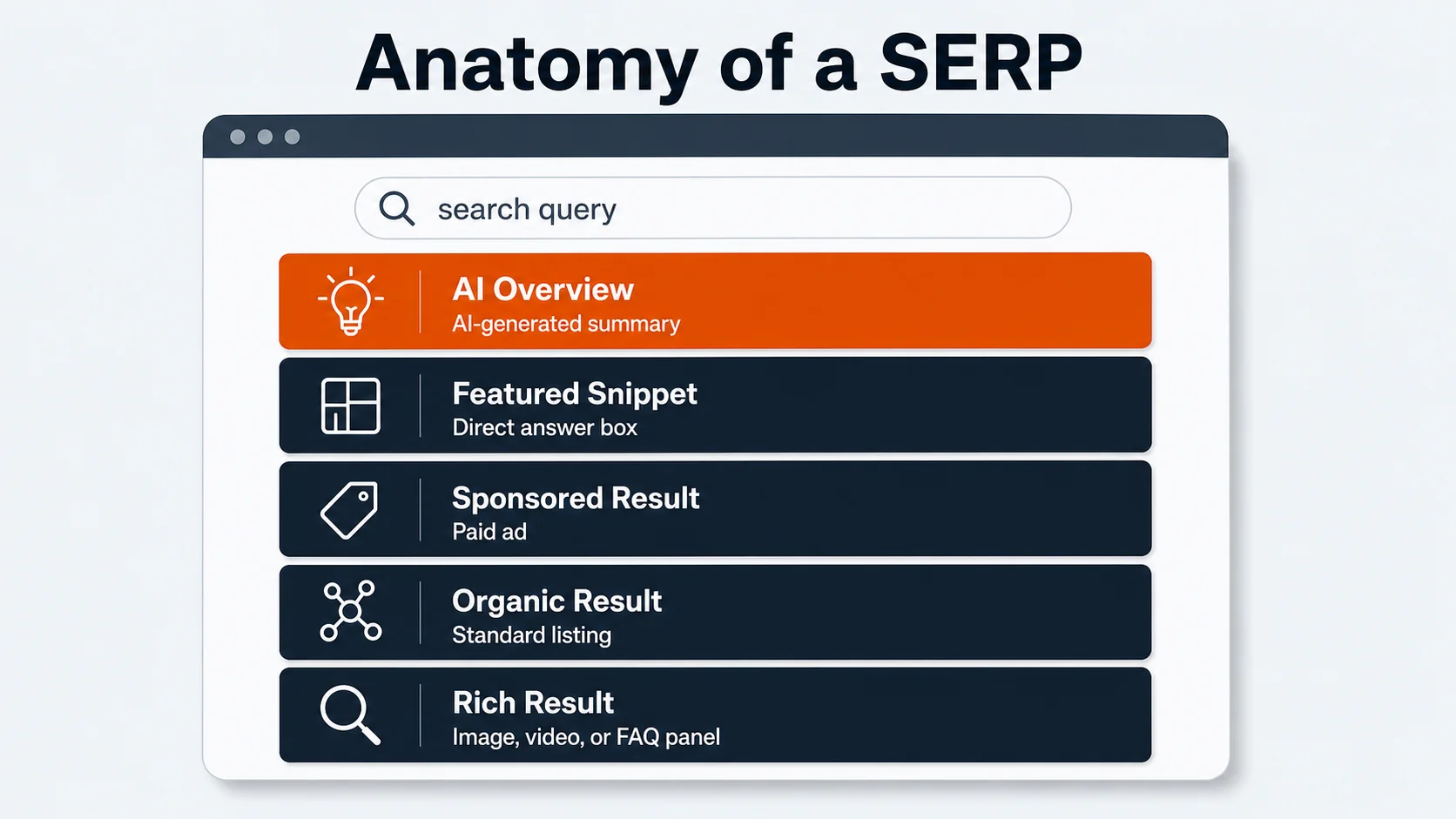
SERP stands for search engine results page. It is the page of results a search engine shows for a query. A SERP can include organic listings, ads, local packs, AI Overviews, featured snippets, People Also Ask results, images, videos, shopping results, and rich results.
Sitemap
A sitemap is a file that lists important URLs on a website. XML sitemaps help search engines discover pages, understand update signals, and prioritize crawl paths. A sitemap does not guarantee indexing, but it helps search engines find the pages you want considered.
Structured Data
Structured data is machine-readable information added to a page to describe its content. Google recommends JSON-LD for most Search structured data. Structured data can make a page eligible for certain rich results when it matches visible content and follows Google’s guidelines.
Title Tag
A title tag is HTML that names a page for browsers and search engines. It often appears as the blue-link title in search results. Strong title tags lead with the page’s topic, match search intent, include the primary keyword naturally, and give users a reason to click.
Topical Authority
Topical authority is the perceived depth and consistency a site has around a subject. A site builds topical authority by covering related questions, linking related pages clearly, keeping content accurate, and showing real expertise. It is not a single metric, but it is useful strategic language.
URL
A URL is the web address of a specific page, file, or resource. SEO-friendly URLs are usually short, readable, stable, and descriptive. URL changes can affect rankings and tracking, so important URL migrations should use redirects, canonical checks, and internal-link updates.
Usability
Usability is how easy and clear a website is for users. It includes navigation, readability, mobile behavior, forms, speed, accessibility, and whether the page helps people do what they came to do. Usability affects SEO because search traffic is only valuable when users can act.
White Hat SEO
White hat SEO refers to optimization practices that align with search engine guidelines and serve users. It includes technical cleanup, useful content, natural links, accessible pages, clean metadata, and honest measurement. White hat SEO usually takes longer than shortcuts, but it is built to hold up.
Zero-Click Search
A zero-click search happens when the user gets enough information from the search results page and does not click a result. Featured snippets, knowledge panels, AI Overviews, calculators, local packs, and quick answers can all contribute. SEO teams track zero-click behavior because impressions may grow while clicks flatten.
Turn SEO Terms Into Better Marketing Decisions
SEO vocabulary is useful only when it leads to better decisions. If a report says indexing is down, Core Web Vitals are failing, internal links are thin, or AI Overview visibility is changing, the next question is what to fix first.
OuterBox can help translate those terms into a practical SEO plan. The right conversation is not “what does this term mean?” It is “what does this mean for your site, your customers, and the work that needs to happen next?”