
Email Marketing Agency for Lifecycle Revenue
A strong email marketing agency should help your list do more than receive scheduled sends. It should help prospects understand your offer, help customers come back at the right moment, and give your team a clear read on what buyers are doing between visits. OuterBox is built for that kind of lifecycle work. We connect campaign strategy, automation, segmentation, creative, platform support, deliverability, and reporting so email can support revenue instead of adding another disconnected channel to manage.
"*" indicates required fields
"*" indicates required fields





Email Marketing Agency Services Built Around Customer Behavior
Email works when the message matches the subscriber’s stage, intent, and recent behavior. A first-time visitor who downloaded a guide needs a different path than a repeat customer who abandoned a cart, ignored three promos, or bought a replenishable product last month.
OuterBox builds email marketing services around those differences. Your program should know who is new, who is engaged, who is likely to buy again, who needs education, who needs a sales follow-up, and who should be suppressed before deliverability gets hurt.
That requires more than a send calendar. Strategy, creative, list quality, automation logic, platform data, site behavior, and reporting all have to agree on what the next useful message should be.
What’s Included in Our Email Marketing Campaign Services
Full-funnel strategy, conversion-focused creative, advanced automation, and transparent reporting—built to integrate with your tech stack and drive measurable outcomes.

Email strategy from an agency that connects lifecycle work to revenue goals
Your email program needs a strategy that explains what to send, who should receive it, and how each message connects to revenue. A strong email marketing agency starts by auditing the current list, platform setup, lifecycle stages, creative library, and reporting model before building a roadmap through digital marketing consulting and channel execution.
- Your lifecycle map separates prospects, first-time buyers, repeat customers, lapsed subscribers, VIPs, and high-value accounts.
- Your KPI model defines how campaigns, flows, list growth, deliverability, and retention will be measured.
- Your channel roadmap names the work that ships first, the dependencies blocking it, and the decisions your team owns.
- Your measurement plan connects email marketing agency services to revenue, leads, LTV, retention, and customer behavior instead of isolated send metrics.
That gives design, copy, targeting, and automation a clear job before production begins.
Email marketing campaign services that keep every send planned, QA’d, and measurable
Recurring campaigns lose value when the calendar, audience, creative, approvals, and tracking all live in separate places. Strong campaign management brings those parts into one operating rhythm, whether the send supports newsletters, product launches, promotions, back-in-stock alerts, or seasonal campaigns.
- Your campaign calendar shows send dates, offer windows, creative deadlines, audience rules, and approval owners.
- Your audience build includes suppression logic, exclusions, engagement filters, and segment notes so the wrong group does not receive the wrong message.
- Your creative proofing process checks subject lines, preview text, links, promo codes, image rendering, accessibility, and mobile layout.
- Your UTM naming and deployment QA make each send measurable once traffic reaches the site.
Campaigns perform better when every send leaves the platform with clean targeting, clean tracking, and no avoidable production mistakes.
Lifecycle automations built around the moments your customers already trigger
Automation works when it responds to real customer behavior, not when it copies a generic flow chart. Welcome, browse abandon, cart abandon, post-purchase, replenishment, win-back, VIP, and back-in-stock flows should be triggered by the moments your site, store, CRM, and product data already capture through marketing automation.
- A welcome series sets expectations, introduces value, and routes new subscribers by interest or acquisition source.
- Browse and cart abandon flows separate product interest from purchase hesitation, then adjust timing and message depth.
- Post-purchase flows support onboarding, cross-sell, review requests, replenishment, and customer education.
- Win-back and VIP flows protect retention by recognizing engagement, purchase frequency, and customer value.
The best automation setup includes event logic, suppression rules, creative variants, timing controls, and reporting checkpoints before any flow is turned on.
The channel keeps earning after launch because each trigger reflects a real customer action and points to one next step.
Email design services that make production faster without flattening your brand
Your templates should make better emails easier to produce, not trap the team in the same layout every week. Strong email design services create a modular system of headers, hero blocks, product sections, editorial sections, promos, social proof, footers, and legal modules that fit the ESP and the brand.
Template work also needs QA discipline. Responsive layouts, dark-mode behavior, accessibility, image weight, alt text, CTA hierarchy, and inbox previews all affect whether the email arrives as designed. A Klaviyo email marketing program, for example, needs template blocks that can support dynamic product content without making every campaign feel automated.
The goal is a flexible production system: campaign teams move faster, designers protect the brand, and subscribers get emails that are readable on the device and inbox they actually use.
Templates improve the channel when speed, consistency, and customer experience all move together.
Segments that separate high-value buyers from everyone else in the list
Segmentation turns a large list into smaller audiences with different intent, value, and risk. Instead of sending the same message to every subscriber, your email program should use purchase behavior, engagement, lifecycle stage, RFM logic, and predictive attributes to shape personalized offers and product recommendations.
- Recent buyers can receive onboarding, cross-sell, replenishment, or loyalty messages that match what they purchased.
- Lapsed subscribers can receive reactivation offers only after engagement and suppression rules make them safe to contact.
- High-value customers can see VIP access, early launches, or loyalty messaging that protects retention.
- Prospects who have not bought yet can receive education, proof, and offer sequencing that reduces hesitation.
Personalization should come from useful decisioning, not first-name tokens or generic dynamic blocks. The segment logic has to explain why a subscriber sees a message and what action that message should influence.
That is where personalization earns its keep: subscribers see messages tied to behavior they have actually shown.
Testing that improves the send, the flow, and the customer path after the click
Email testing should improve more than open rates. Subject lines, preview text, send time, offers, creative hierarchy, flow timing, landing-page handoff, and audience selection all affect whether a subscriber clicks, converts, unsubscribes, or ignores the next message. Conversion rate optimization keeps the test plan connected to what happens after the click.
- Subject line and preview tests show which promise earns attention without training subscribers to expect noise.
- Send-time and frequency tests help protect revenue without increasing fatigue or complaint risk.
- Offer and creative tests reveal whether value, urgency, product framing, or proof is doing the work.
- Flow-level tests and holdout groups show whether automation is creating incremental value or just taking credit for demand that already existed.
Testing needs documentation so one win becomes a channel learning, not a one-time result buried in a report.
The value comes from carrying each learning into the next send and the onsite path it feeds.
Email reporting that shows revenue, flow health, and the next decision
Email reporting should help the team decide what to do next. A useful dashboard separates campaign performance, automation performance, segment behavior, list health, and site revenue so leadership can see whether email is growing profitably. That requires analytics consulting discipline, not screenshots from an ESP dashboard.
- Campaign reporting tracks revenue per send, click rate, conversion rate, unsubscribe rate, and offer performance by audience.
- Flow reporting separates welcome, abandon, post-purchase, win-back, replenishment, and loyalty automations so weak paths are visible.
- Attribution reporting connects UTMs, ecommerce revenue, CRM outcomes, and assisted conversions without double-counting obvious wins.
- List-health reporting monitors engagement, spam complaints, deliverability risk, and cohort behavior over time.
An email marketing firm should not leave clients guessing whether the channel is improving or simply sending more volume.
Useful reports end with decisions: which campaign, flow, segment, or deliverability issue gets fixed next.
Platform support that connects your ESP, CRM, store, and reporting stack
Email performance depends on the data moving through the stack. Your ESP, CRM, ecommerce platform, product feed, consent system, and reporting tools all need clean field mapping so segments, triggers, and attribution read the same customer record. Salesforce email marketing work is one example of how CRM-connected programs need both platform fluency and campaign judgment.
Integration support covers event streams, product catalogs, coupon feeds, lifecycle stages, preference data, and consent status. It also includes the less glamorous work that keeps the channel stable: naming conventions, data validation, field cleanup, sync checks, fallback content, and QA after platform updates.
The platform choice matters, but the operating model matters more. A powerful ESP still underperforms when the data feeding it is incomplete, duplicated, stale, or disconnected from the customer journey.
Data flows support better email when every system agrees on who the customer is and what should happen next.
List growth that protects deliverability while adding qualified subscribers
List growth only helps if the new subscribers are real, consented, and likely to engage. Onsite forms, pop-ups, quizzes, gated resources, account prompts, checkout opt-ins, and content marketing offers can all grow the list, but each source needs rules that protect quality.
- Forms and pop-ups should match the page intent, device, offer, and subscriber stage instead of interrupting every visit the same way.
- Lead magnets should attract the audience you want to email later, not bargain hunters who never engage again.
- Preference centers and suppression lists should keep people subscribed to what they want and away from what they do not.
- SPF, DKIM, DMARC, CAN-SPAM, GDPR, CASL, and list hygiene should be maintained before deliverability becomes a crisis.
Healthy growth balances acquisition with consent, engagement, and inbox trust.
The list becomes an asset only when subscriber quality improves alongside subscriber count.
Support and training that leaves your team with cleaner email operations
Outside support should make the internal team stronger, not dependent on a black box. Expert support includes platform walkthroughs, creative feedback, QA checklists, naming conventions, reporting interpretation, and a prioritized backlog that explains what the team should ship next. For teams running Mailchimp email marketing or another ESP internally, enablement can be the difference between having tools and running a disciplined channel.
Training also protects continuity. When campaign owners change, documentation explains how segments are built, which flows are live, what naming rules exist, where approvals happen, and how performance gets reviewed. That keeps the channel from drifting every time a teammate leaves or a platform update changes the interface.
The strongest support model gives your team clearer decisions, cleaner execution, and fewer recurring mistakes.
Teams keep improving when guidance becomes a repeatable operating system instead of one-off advice.
Automation That Finds Revenue Leaks
Email automation is most valuable when it catches a moment the current program is missing. A welcome series can set expectations. Browse abandonment can bring shoppers back to products they viewed. Cart abandonment can recover high-intent users who stopped before checkout. Post-purchase, replenishment, VIP, and win-back flows can protect repeat revenue.
For teams that need platform-specific support, Klaviyo email marketing work can connect product behavior, customer properties, and automation logic without forcing every campaign into the same flow pattern.
Unclaimed Baggage: A Missing Cart Touchpoint Recovered $51K

Unclaimed Baggage had email automations but no touchpoint for users who added items to cart and stalled before checkout. OuterBox created a new “Added to Cart” Klaviyo metric and triggered an abandoned cart flow between browse abandonment and checkout abandonment.
Strategic Email Marketing That Delivers Results
This video explores our comprehensive approach to email marketing, from building quality lists to advanced automations. We discuss how to use personalization and behavioral data to create meaningful customer journeys that move prospects through the funnel, delivering a higher ROI than almost any other digital channel.
Watch how we leverage email automation to drive high-impact customer journeys.

“OuterBox’s automation strategy and design refresh helped us unlock a 133% lift in revenue from email in just a few months.” – eCommerce Marketing Director @ Zerbee
Email Marketing Services
Get a Free Email Marketing Services Estimate
Your email program may need a cleaner campaign calendar, stronger automation, better reporting, platform support, or a full strategy reset. Use the form to request an estimate, or call (866) 647-9218 to talk through the problem.
Services
"*" indicates required fields
From Start-Ups to Fortune 500 Companies Our Clients Are Succeeding Online









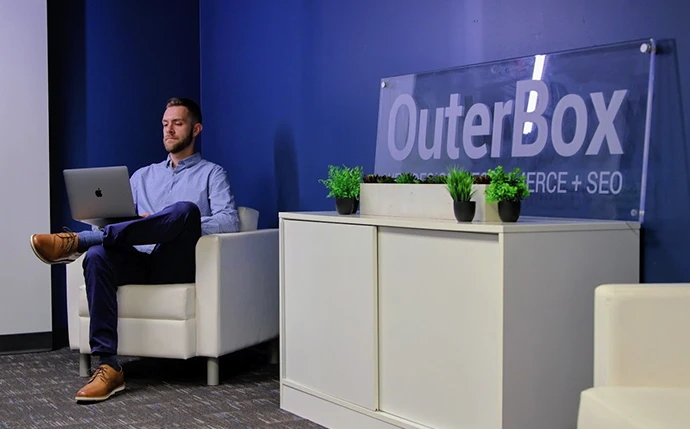
Meet the Email Marketing Team Behind the Work
OuterBox has worked in digital marketing since 2004, and email benefits from that broader view. The channel touches creative, analytics, CRO, SEO, paid media, CRM data, product feeds, development, and the customer experience after the click.
Our team members (a.k.a. "Boxers") include strategists, designers, developers, analysts, writers, CRO specialists, and paid media experts. That structure gives your email marketing firm more than production capacity. It gives your team a partner that can diagnose, document, build, measure, and keep improving the program.
OuterBox proof points support that continuity: 20+ years as a digital marketing agency, 1000+ successful client partnerships, 2M+ page-one Google rankings, and 300+ USA-based, in-house experts. Size alone is not the point. The point is having the right specialists in the room when email depends on more than the send button.
20+ Years
Digital Marketing Agency
1000+
Successful Client Partnerships
2M+
Page #1 Google Rankings
300+
USA-Based, In-House Experts
Why Choose OuterBox for Email Marketing
Choosing between email marketing agencies should come down to how the work gets connected. Your team needs a partner that can manage campaigns and flows, but also understand the site, data, creative, platform, and reporting decisions that shape revenue.
OuterBox Email Marketing
- Strategy starts with lifecycle stages, audience quality, platform data, and revenue goals.
- Campaign management covers audience rules, creative QA, UTM discipline, approvals, and post-send analysis.
- Automation work looks for missing customer moments such as browse, cart, post-purchase, replenishment, win-back, and VIP paths.
- Platform support connects the ESP, CRM, eCommerce store, product data, consent status, and reporting model.
- List growth balances acquisition, consent, engagement, preference, and deliverability.
- Reporting turns campaign, flow, list-health, and revenue data into the next priority.
- OuterBox can connect email with CRO, analytics, content, SEO, and paid media when the customer path crosses channels.
Common Buyer Risk With Narrow Email Support
- The calendar fills up before the team agrees on who should receive each message.
- Sends go out, but learnings do not carry into the next campaign.
- Flows exist, but important customer behaviors still fall through the cracks.
- The ESP looks active while customer data remains incomplete, duplicated, or hard to trust.
- Subscriber count grows while inbox trust and audience quality decline.
- Reports show activity without explaining what the team should fix next.
- Email is treated as a separate lane, even when the landing page or traffic source is the real issue.
Reporting That Turns Email Into Decisions
Email reporting should end with a decision, not a screenshot. Open rate, click rate, conversion rate, revenue per send, unsubscribe rate, complaint rate, flow performance, list growth, and cohort behavior each answer a different question.
OuterBox reporting separates those signals so your team can see what to change next. Campaign reports show which audience, offer, creative angle, and product story worked. Flow reports show where welcome, abandon, post-purchase, replenishment, VIP, and win-back paths are creating value. List-health reports show when growth is creating risk instead of revenue.
That is also where analytics consulting matters. ESP dashboards can show email activity, but GA4, CRM data, eCommerce revenue, and site behavior help explain whether the channel is creating useful customer movement after the click.
The best report gives the team a short list: send this again, change that segment, fix this flow, test this offer, clean this audience, or improve the landing page before the next campaign.
Talk to OuterBox About Email Marketing
Email can support revenue, retention, sales conversations, and customer education when the program is built around real behavior. If the channel feels busy but unclear, the next step is diagnosis. Bring us the parts that are not working, such as low engagement, weak flows, messy data, poor attribution, list fatigue, creative bottlenecks, or a platform your team no longer trusts.
"*" indicates required fields
"*" indicates required fields
Other Email Marketing Services from OuterBox
Related Services for Email Revenue






Email Marketing FAQs

What does an email marketing agency do?
An email marketing agency plans, builds, manages, tests, and reports on email campaigns and automations. The work can include strategy, creative, segmentation, templates, flows, deliverability, list growth, platform support, and performance reporting.
Why should we work with an email marketing agency?
Your team gets outside strategy, production support, QA discipline, platform knowledge, and reporting structure without putting every task on internal staff. OuterBox also connects email with analytics, CRO, content, SEO, and paid media when those channels affect results.
What types of emails can OuterBox help create?
OuterBox can help with newsletters, promotions, product launches, welcome series, browse abandonment, cart abandonment, post-purchase, replenishment, win-back, VIP, review-request, and sales-support emails. The right mix depends on your audience and platform data.
How do you measure email marketing performance?
Email performance should be measured through revenue, conversion rate, click rate, flow performance, list growth, unsubscribe rate, complaint risk, cohort behavior, and assisted conversion value. The goal is to see what the channel changed, not just what it sent.
How does email automation work?
Email automation sends messages based on triggers such as signup, product browsing, cart activity, purchase behavior, lifecycle stage, or inactivity. Strong automation includes timing rules, suppression logic, useful creative, and reporting that shows whether the flow created incremental value.
How can we grow our email subscriber list?
Subscriber growth can come from forms, pop-ups, quizzes, gated resources, checkout opt-ins, account prompts, preference centers, and content offers. The safest growth plan balances volume with consent, engagement, list hygiene, and deliverability.
Which email marketing platform should we use?
The right platform depends on your business model, CRM, eCommerce store, customer data, automation needs, reporting requirements, and internal team. Klaviyo, Mailchimp, HubSpot, Salesforce, and other platforms can all fit different situations.
Can email support SEO, paid media, and CRO?
Yes. Email can turn paid and organic traffic into owned follow-up, support content distribution, recover shoppers after the click, and show which offers or messages deserve CRO testing. It works best when those channels share data and decisions.
Related Articles: Email Marketing Services

Email | 5 min read
Email Marketing Defined Before we look at email marketing’s cost, we need to explain what email marketing actually is. A form of direct marketing, email…

Email | 5 min read
Think B2B email marketing doesn’t work in the industrial industry? Industrial marketing requires tons of touchpoints throughout a long sales cycle. Without email marketing, you…

Email | 6 min read
When you open your inbox in the morning, you likely see polished campaigns from B2C and eCommerce companies. It’s true, email marketing is a big…