
Self Storage SEO Services For Facility Operators
Self storage SEO needs to connect nearby renters with the right facility before they compare another option. OuterBox builds self storage SEO services around the way people search for storage by location, unit size, amenities, access needs, and urgency.
"*" indicates required fields
"*" indicates required fields





Self Storage SEO Built Around How Renters Search
For a single facility or a growing portfolio, the goal is the same: make each location easier to find, easier to trust, and easier to act on. That means strengthening local visibility, facility pages, unit and amenity content, technical crawl paths, reporting, and the conversion steps that turn search demand into calls, quotes, reservations, and tours.
Renters rarely search in a straight line. One person may start with “storage units near me,” then compare climate-controlled options, gate access, vehicle storage, reviews, photos, office hours, and online reservation terms. Another may already know the neighborhood and need a 10×20 drive-up unit before the weekend. SEO for self storage has to support both paths.
That is why self storage search visibility depends on more than ranking one service page. Google Business Profiles need accurate location data, facility pages need enough local detail to match nearby intent, and unit or amenity pages need to answer the questions that help renters choose. Local SEO services are central because Map Pack visibility, NAP consistency, reviews, citations, and location relevance all shape whether a renter sees your facility at the moment they need storage.
A self storage SEO company should also think past the click. If a renter lands on a location page, the page should make the next decision obvious: check available units, compare sizes, call the office, request a quote, or reserve online. Search, local proof, and conversion all have to work together.
Self Storage SEO Services Built For Facility Growth
OuterBox self storage SEO services are built around the operational pieces that influence local visibility and renter action. The work can include local SEO, on-page optimization, content strategy, technical SEO, link building, conversion support, analytics, and multi-location architecture depending on the needs of the facility or portfolio.

Core Program Components
Local SEO for self storage facilities that turns nearby searches into rental inquiries
Nearby renters usually choose from the facilities they can compare fastest, and local SEO puts your locations in that consideration set. A self storage SEO program has to make every Google Business Profile clear, complete, and specific enough that climate control, gate access, truck parking, and office hours show up before the call happens.
- Renters see the right location name, address, hours, phone number, and access details before they visit your website.
- Facility amenities such as climate control, drive-up access, vehicle storage, and security features match the searches customers already run.
- Reviews, photos, posts, and Q&A answers reduce the uncertainty around price, access, safety, and unit fit before a tour is scheduled.
- Map Pack signals stay consistent across citations, landing pages, and profiles, so Google can connect each search to the correct location instead of a nearby competitor.
Nearby renters find a facility that looks credible, close, and ready for the storage need they have today.
Self storage SEO services aligned to unit types, amenities, and local intent
Your unit and location pages need to match how people actually shop for storage: by size, amenity, neighborhood, price sensitivity, and urgency. Strong self storage SEO services make those pages specific enough for search engines and useful enough for someone comparing a 5×10 climate-controlled unit against a drive-up 10×20 across town.
LocalBusiness schema gives Google a cleaner read on each facility, while headings, title tags, internal links, and body copy clarify what each page should rank for. A self storage SEO company should also separate climate-controlled units, vehicle storage, business storage, student storage, and local service areas when those topics carry distinct demand. That is where on-page SEO services support the broader page structure instead of treating every facility page like the same template across every market.
Renters comparing units land on pages that answer their specific storage need before they return to the search results again for a clearer option.
Content strategy that answers renter questions before they compare facilities
Renter questions create demand long before someone fills out a quote form, and content marketing gives your facility a way to answer those searches before a competitor does. Digital marketing built around self storage SEO should cover the practical decisions customers make while they are moving, downsizing, staging a home, renovating, or storing business inventory in a hurry.
- Shoppers understand whether a 10×10 vs 10×15 unit size guide fits their furniture, boxes, or equipment.
- Local pages answer neighborhood-specific questions about access, security, parking, and nearby landmarks.
- Resource content supports moving timelines, packing choices, seasonal storage, college move-out, and business-use cases without drifting into generic blog filler.
- Pricing and promotion pages set expectations around admin fees, insurance, locks, and online reservation terms, so shoppers do not abandon when costs feel unclear.
Renter trust grows when your content directly answers the questions that usually delay a reservation or send shoppers back to Google for another facility.
Technical SEO that keeps every facility and unit page crawlable
Your site architecture has to scale without burying priority pages, especially when every location, unit type, promotion, amenity, and reservation flow can create another URL. Technical SEO keeps self storage SEO services from stalling because Google cannot crawl, render, or understand the pages that should be ranking in each local market. That foundation matters most when one platform supports dozens of properties.
- Renters reach facility pages through clean navigation, XML sitemaps, and internal links that point to revenue-producing URLs.
- Mobile renters get faster comparisons when Core Web Vitals improve the experience on unit and location pages.
- Your strongest local pages keep authority when canonical rules and indexation controls prevent duplicate unit filters, promo URLs, and location variants from competing.
- Operators catch schema, page speed, mobile usability, and reservation-path issues before those problems turn into ranking or conversion losses.
Priority facility pages stay accessible to search engines and useful to renters who need answers quickly from any device, even when the site keeps growing across locations.
Authority building anchored in the credible community signals storage shoppers already trust
Your facility earns stronger search visibility when the web around it confirms that the business is real, local, and relevant. The work focuses on credible community signals rather than risky link tactics that make rankings fragile. The strongest signals look natural because they come from the organizations customers already recognize.
Self Storage Association member listings, local Chamber of Commerce directory pages, moving-company partnerships, sponsorship mentions, neighborhood resources, and relevant vendor relationships all help connect your brand to the markets it serves. Those sources support link building because they match how storage customers and local businesses already discover trustworthy providers. The point is not to collect random backlinks; it is to reinforce the facility, city, and service signals that support self storage SEO rankings.
Your brand earns more trust when local authority signals match the communities your facilities serve and the markets where renters compare storage options.
Conversion paths that turn organic facility traffic into calls, quotes, and rentals
Organic traffic only matters when renters can take the next step without friction. Each facility page should connect search intent to unit availability, rate clarity, security proof, access hours, and contact options, while conversion rate optimization removes the points where motivated renters abandon before reserving or calling. That handoff keeps rankings tied to revenue instead of visits alone.
- Rental-ready visitors see phone numbers, quote forms, facility hours, and online reservation paths without hunting through the page.
- Storable or SiteLink reservation widgets connect live unit availability to the moment a renter is ready to compare options.
- Trust signals such as reviews, security features, access hours, and facility photos support the decision before price becomes the only factor.
- Form, call, and reservation paths stay simple enough for mobile users who need storage quickly.
More visitors become inquiries when the page makes the next storage decision obvious and removes avoidable hesitation from the quote or reservation path before interest cools.
Reporting that ties location-level visibility to rental outcomes across the portfolio
Your reporting has to show which locations are gaining visibility, which search terms are creating demand, and which channels are producing calls, quote starts, reservations, or tours. The view should connect rankings to business outcomes instead of stopping at traffic charts that do not explain occupancy impact. That clarity matters when budgets shift by market.
- Operators see Google Business Profile actions, organic landing-page visits, calls, forms, reservations, and occupancy-adjacent lead signals by location.
- GA4 events show how renters move from search landing pages into quote, call, tour, and reservation paths.
- Call tracking connects phone inquiries back to organic and local search campaigns.
- Keyword movement and Map Pack visibility show where the next round of work should be prioritized for biggest occupancy impact.
Operators reviewing performance clearly see which facilities need attention, which markets deserve more investment, and which gains can scale across the portfolio next with confidence.
Multi-location architecture that lets storage operators scale without duplicate pages across facilities
Growing operators need local pages that feel specific without turning every facility into a copy of the same template. SEO for self storage gets harder as locations multiply, because names, addresses, amenities, nearby landmarks, reviews, promotions, access rules, and unit mixes all need enough uniqueness to support rankings. The architecture has to protect both scale and local relevance.
A scalable location rollout framework gives every facility a consistent structure while still leaving room for local proof. Schema.org Place markup per location, unique facility descriptions, clean locator paths, and governance for NAP, gate hours, and amenity details help digital marketing for self storage SEO stay consistent across the network. The goal is not more pages for their own sake; it is a location system Google can understand and operators can maintain.
Facility managers get a structure that can expand without turning the site into duplicate local pages or weakening each facility’s local relevance in search.
Strategic SEO For Self Storage Facilities
OuterBox builds self storage SEO strategies around local-market demand, facility pages, unit and amenity content, technical crawl paths, and conversion actions that lead to calls, quote requests, reservations, and move-ins.
Learn how our custom SEO strategies help self-storage facilities dominate local search.
Reporting Should Connect Rankings To Rental Actions
Rankings matter, but self-storage operators also need to see whether search visibility is creating useful actions. Reporting should connect keyword movement and Map Pack visibility to Google Business Profile actions, organic landing-page visits, calls, quote starts, reservations, tours, and form submissions by location.
That view helps a team decide what to fix next. A facility may rank well but lose renters on a slow mobile reservation flow. Another may get impressions but need stronger photos, reviews, or local copy before renters trust the location. A third may need technical cleanup because unit and promotion URLs are competing with the main facility page.
OuterBox can connect call tracking and Google Analytics consulting to the SEO program when measurement needs more structure. The point is not to create a larger dashboard. It is to make location-level decisions clearer, so operators know which markets need more content, stronger local proof, better conversion paths, or technical attention.
Self Storage SEO Services
Get Your SEO Proposal & Free Strategy Blueprint
We’ll get back to you within 24 hours, Monday–Friday. Prefer to talk now? Call 1-866-647-9218 (9–5 EST).
Services
"*" indicates required fields
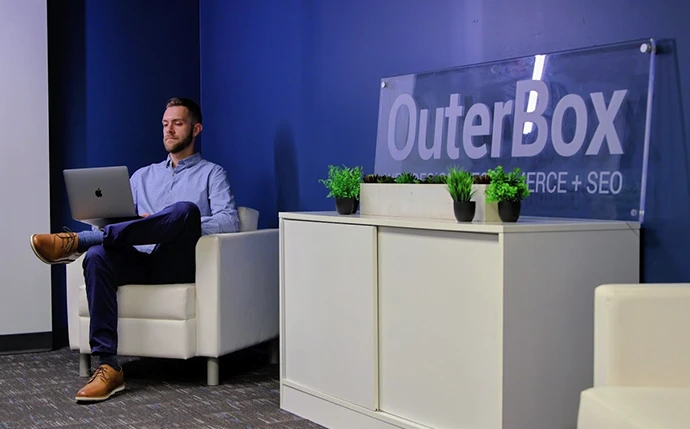
Why Self Storage Operators Choose OuterBox
Self-storage operators need an SEO partner that can work across local search, content, technical SEO, analytics, CRO, and development without splitting the strategy into disconnected tasks. A location page issue may be a content issue. A ranking issue may be technical. A lead-quality issue may sit inside analytics, call tracking, or the reservation path.
OuterBox has worked in digital marketing since 2004 and brings 300+ USA-based, in-house experts across SEO, paid media, content, analytics, CRO, web design, and development. Our team members (a.k.a. "Boxers") are expected to bring 100/100 ownership to the work: ownership of actions, results, and behaviors. For self storage SEO, that means the person reviewing local pages, the person diagnosing technical issues, and the person reading performance reports stay aligned around the same facility growth goals.
That cross-functional depth matters for operators with one website supporting many local markets. The SEO strategy can account for Google Business Profiles, citation consistency, location architecture, schema, technical crawl paths, content refreshes, authority signals, and conversion reporting without losing the renter's decision path.
Since 2004
Digital Marketing Agency
300+
USA-Based In-House Experts
100/100
Ownership Standard
Boxers
Cross-Functional Team

Did you know PPC can capture renters who need storage today while SEO builds sustained visibility? Running both often lowers blended cost per rental. Google Ads Management for Storage Facilities>
Ready To Compete For More Local Storage Searches?
If your self-storage facility or portfolio needs stronger local visibility, clearer location pages, better reporting, or a reservation path that connects search demand to renter action, OuterBox can help build the roadmap.
"*" indicates required fields
"*" indicates required fields
Other SEO Services from OuterBox
Related Services For Self Storage SEO




Self Storage SEO FAQs

Why is SEO important for self-storage facilities?
SEO helps self-storage facilities appear when nearby renters are actively comparing options. Those searches often include location, unit size, climate control, vehicle storage, access hours, security, and price expectations. Strong SEO makes the facility easier to find and gives renters enough detail to take the next step.
What makes self storage SEO different from general local SEO?
Self storage SEO still depends on local SEO fundamentals, but the page structure is more specific. Facility pages, unit-size pages, amenity content, Google Business Profiles, reviews, reservation paths, call tracking, and portfolio reporting all have to connect. A generic local SEO plan may miss the details that renters use to choose a storage facility.
What self storage SEO services does OuterBox provide?
OuterBox self storage SEO services can include local SEO, on-page SEO, content strategy, technical SEO, link building, conversion optimization, analytics, and multi-location SEO architecture. The exact mix depends on the site’s current condition, facility count, local competition, platform, and growth priorities.
How long does SEO for self storage take?
Timing depends on market competitiveness, number of locations, technical condition, local profile accuracy, content depth, and authority signals. Some cleanup work can happen early, such as Google Business Profile updates, title and content improvements, technical fixes, or reporting setup. More durable organic and local visibility usually compounds over months as the site, local signals, and content base improve.
How much does self storage SEO cost?
Cost depends on the number of facilities, market competition, technical complexity, content needs, local-page scale, citation and review cleanup, reporting requirements, and whether the program needs CRO or development support. Operators comparing scope can also review SEO packages as a planning reference, but the right self-storage scope should be based on the facility network and competitive market.
Can SEO help multi-location self-storage operators?
Yes. Multi-location operators often need SEO because each facility has its own market, competitors, amenities, reviews, and local search signals. The program should give each location enough unique proof while keeping NAP, schema, hours, photos, and page templates governed across the portfolio.
Does self storage SEO include Google Business Profile work?
Yes. Google Business Profile work is often central to self storage SEO because nearby renters compare facilities directly in local results. Profile categories, services, photos, posts, reviews, Q&A, hours, phone numbers, and location details should align with the facility page and the broader local SEO strategy.
How should self storage SEO performance be measured?
Performance should be measured across rankings, Map Pack visibility, Google Business Profile actions, organic landing-page visits, calls, forms, quote starts, reservations, tours, and location-level trends. The best reporting connects visibility to renter actions, so operators can see which facilities need content, local proof, technical fixes, or conversion support next.