
eCommerce PPC Agency for Shopping, Search, and Revenue Growth
Paid traffic only matters when it becomes profitable revenue. OuterBox is an ecommerce PPC agency for online stores that need Shopping, Search, Performance Max, remarketing, product feeds, landing pages, and reporting working against the same revenue model, with campaigns structured around your catalog, margins, seasonality, and revenue data so every channel has a clear job.
eCommerce PPC Management Built Around Margin, Catalogs, and ROAS
Ecommerce pay per click is more complicated than a standard lead-generation account. A retailer has to decide which categories deserve budget and which products can support a target ROAS. Promotions, traffic quality, and conversion paths all affect where spend should move next.
OuterBox builds ecommerce PPC management around those decisions. Your campaigns are organized by brand, non-brand, product type, margin, inventory priority, and funnel stage so the account shows where spend is working and where it is drifting.
That structure makes the weekly optimization work more useful. Budget can shift toward categories with stronger return. Search terms can be cleaned against product intent.
Shopping groups can be separated by performance. Landing page issues can be traced back to campaign data before they turn into a bigger spend problem.
What’s Included in Our eCommerce PPC Management
A cohesive, multi‑channel system that aligns SEO, paid media, content, and analytics to generate and nurture high‑quality leads. These ecommerce PPC management services are built for catalog complexity, with account strategy, Shopping structure, feed coordination, landing page feedback, and reporting handled as one operating system.
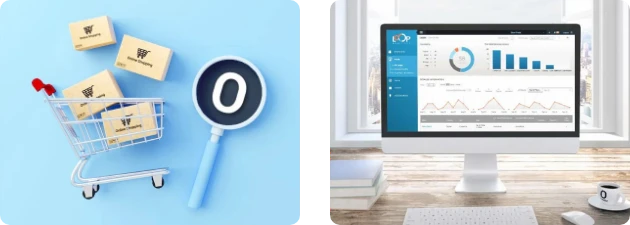
eCommerce PPC Strategy & Setup
Your eCommerce PPC services start with your goals, margins, and seasonality mapped before a dollar is spent. Industry benchmarks put the average Google Ads ROAS for ecommerce between 4:1 and 8:1, but your target depends on your margins, your average order value, and where you are in your growth curve. Your PPC management program and eCommerce strategy share the same account architecture, so your team and ours align on targets before the first campaign launches.
- Your existing account audited for wasted spend, structural issues, and conversion tracking gaps before any new campaigns go live
- Your campaign structure built around product categories, margin tiers, and seasonal demand cycles so budget flows to the opportunities with the highest return
- Your audience segments, device targeting, and geographic bid adjustments configured based on your actual customer data rather than platform defaults
- Your budget allocated by funnel stage so prospecting, mid-funnel, and bottom-funnel campaigns each get the investment their conversion economics justify
- Your KPIs defined in terms your finance team recognizes: ROAS, cost per acquisition, and contribution margin rather than vanity clicks
PPC for ecommerce improves when the campaign structure reflects how your business actually makes money.
Google Shopping Management for eCommerce PPC
Your product listings compete on data quality and bid strategy before they compete on price. WordStream research found that roughly one in three ecommerce paid clicks goes to Shopping ads, making feed-driven campaigns the largest source of paid traffic for most online retailers. Your Google Ads management program treats Shopping as a core campaign type where product grouping, bid precision, and feed optimization run as daily operations.
- Your products grouped by performance tier and margin so high-value SKUs get bid priority and low-margin items stay controlled
- Your bidding strategy selected by campaign maturity: manual CPC for new launches, target ROAS for established products, value-based bidding when data volume supports it
- Your product titles and descriptions optimized for the queries shoppers actually use, matching search intent rather than catalog defaults
- Your images meeting Google’s compliance standards and positioned to stand out against competitors in the same auction
- Your negative keywords managed at the product group level to prevent irrelevant queries from draining budget on products that already convert
Shopping campaigns built on clean data and precise grouping outperform campaigns that treat the entire catalog as one bidding unit.
Search Campaigns (Brand & Non-Brand)
Your brand campaigns protect your name from competitor bidding. Your non-brand campaigns capture shoppers who are searching for what you sell but haven’t found you yet. Brand clicks cost a fraction of non-brand, and they convert at a higher rate. Both matter. Your eCommerce SEO program and paid search target the same buyer queries from different angles, and the data from each channel sharpens the other.
- Your brand campaigns structured to defend your name, sitelinks, and product extensions against competitors bidding on your terms
- Your non-brand keyword sets expanded by product category, feature, and use case so campaigns reach shoppers at every stage of their purchase research
- Your match types calibrated to your bidding strategy: exact match for precision, phrase match for reach, broad match paired with smart bidding when conversion data is deep enough
- Your ad copy tested across responsive search ad variants, callout extensions, and sitelinks to find the combinations that drive the highest click-through and conversion rates
- Your landing pages routed by intent so category searches land on category pages, product searches land on product pages, and promotional queries reach the right offer
Revenue from search campaigns grows when brand defense and non-brand expansion run as coordinated programs.
Product Feed & Merchant Center
Your product feed is the foundation for Shopping and Performance Max campaigns. Google’s Merchant Center documentation is clear: disapproved products don’t appear in Shopping ads or free listings (the kind of invisible cost most advertisers troubleshoot last). Your eCommerce web design work structures product data so the feed stays clean from the source, reducing manual fixes downstream.
- Your GTINs, MPNs, and required attributes verified across the full catalog so products stay eligible for every ad surface Google offers
- Your pricing and availability synced between your store and your feed in real time so shoppers never see a price that doesn’t match checkout
- Your custom labels applied to tag products by margin tier, seasonal priority, and inventory status so bidding strategies can target the right segments
- Your supplemental feeds used for title overrides, promotional text, and A/B testing without touching your primary product data
- Your Merchant Center account monitored daily for disapprovals, policy warnings, and data quality issues so problems get fixed before they cost impressions
Feed quality compounds across every campaign that draws from it, and a clean feed makes every other optimization more effective.
Performance Max Integration for eCommerce PPC
Your Performance Max campaigns run across Search, Shopping, Display, YouTube, Gmail, and Discover from a single campaign structure. Smarter eCommerce research found that PMax cost share among ecommerce advertisers peaked near 82% by mid-2024, making it the dominant campaign type for online retailers running Google Ads. Your paid media program uses Performance Max alongside channel-specific campaigns so reach and control stay balanced.
- Your asset groups built with product-specific text, images, and video organized by category so Google’s automation has strong creative inputs to work with
- Your audience signals seeded with first-party customer lists, website visitors, and in-market segments so the algorithm starts with your best data rather than guessing
- Your standard Shopping campaigns running alongside Performance Max when catalog size or data maturity calls for more granular bid control on high-value products
- Your search term insights reviewed regularly for query-level visibility, catching irrelevant traffic or missed opportunities that the automated system surfaces
- Your budget and ROAS targets calibrated per campaign so Performance Max scales spend into profitable territory without overriding your margin thresholds
Automated campaigns perform best when they run on strong inputs, and strong inputs come from the manual work done before automation takes over.
eCommerce PPC Remarketing & Audiences
Your past visitors are your highest-value audience. Industry data shows that retargeted users are 70% more likely to convert than first-time visitors, and dynamic remarketing shows them the specific products they viewed. Your content marketing program creates the creative assets that fuel remarketing campaigns, keeping your brand present across the channels where past visitors spend time.
- Your dynamic remarketing ads pulling product images, prices, and descriptions directly from your feed so each impression shows the items a shopper already considered
- Your audiences segmented by engagement depth: cart abandoners, product page viewers, past purchasers, and high-value repeat customers each get messaging matched to their stage
- Your customer match lists uploaded for repeat purchase campaigns, targeting buyers who already trust your brand with new products, cross-sells, and seasonal offers
- Your promotional and seasonal audiences activated on a schedule so remarketing spend ramps up during peak periods and scales back when demand softens
- Your cross-channel remarketing coordinated between Google and social platforms so frequency stays controlled and messaging stays consistent across touchpoints
Returning visitors close at a higher rate because the trust is already built, and remarketing keeps your products visible while they decide.
eCommerce PPC Reporting & Communication
Your team sees the same data your ecommerce PPC agency partner sees. OuterBox has managed eCommerce ad budgets for over two decades, and that experience shapes a reporting cadence built around decisions rather than dashboards. Your analytics team builds the attribution model that ties ad spend to revenue, so the numbers in your reports connect to the numbers your finance team tracks.
- Your weekly strategy calls covering performance trends, budget adjustments, and upcoming tests so your team stays involved in every optimization decision
- Your shared dashboard showing real-time spend, ROAS, conversion volume, and cost per acquisition across every active campaign
- Your revenue attribution connecting ad clicks through checkout to completed transactions, giving your team a clear path from spend to revenue
- Your monthly optimization reports documenting what changed, what improved, and what the next period’s priorities look like
- Your quarterly business reviews tying campaign performance to broader business outcomes, keeping PPC strategy aligned with your growth plan
Reports that tie every dollar of ad spend to a measurable business outcome turn PPC from a cost center into a growth channel your team can defend at budget review.
Landing Pages & CRO Support for eCommerce PPC
Your ads drive traffic, but your landing pages decide whether that traffic converts. Google’s own documentation confirms that higher-quality ads cost less per click, and landing page experience is one of the three components that determine Quality Score. Your CRO consulting program and PPC management share conversion data so landing page improvements compound across every campaign driving traffic to them.
- Your landing pages audited for alignment between ad copy, keyword intent, and on-page messaging so the experience a shopper expects matches the experience they get
- Your trust signals (reviews, security badges, return policies, guarantees) placed where they support the purchase decision at the moment hesitation is most likely
- Your page speed and mobile experience assessed against Core Web Vitals targets because slow pages lose shoppers before the offer has a chance to work
- Your A/B testing recommendations informed by campaign-level conversion data, focusing on the page elements that campaign performance identifies as friction points
- Your checkout flow analyzed for drop-off points, with fixes prioritized by the revenue at stake at each step
Landing page improvements lower your cost per click and raise your conversion rate at the same time, and that combination accelerates every ecommerce PPC campaign running to those pages.
Product Feed, Merchant Center, and Landing Page Quality Decide How Far Spend Can Scale
Many ecommerce PPC issues start outside the bid strategy. Product titles get written for an internal catalog instead of shopper search, availability updates in the store faster than the feed, and Merchant Center warnings sit too long because no one has tied them to revenue risk.
OuterBox treats those as paid media issues because they directly affect eligibility, click quality, conversion rate, and ROAS. Feed work connects with Google Shopping feed management, product-page friction with conversion rate optimization, and catalog structure with eCommerce SEO services. The paid media team needs enough visibility into the store to know when the problem is the bid, the feed, the page, the offer, or the data.

Real Brand Results
eCommerce Growth From Paid Media and Integrated Search
OuterBox paid media work has supported ecommerce and product-driven brands where the account needed more than routine bid adjustments.

425% More Paid Conversions
GPI Meters came to OuterBox with low paid-media ROI from an authorized reseller site. We restructured the account by product type, rewrote ad copy, and launched Google Shopping. 425% increase in paid conversions and a 48% lower cost per conversion.

744% Return on Ad Spend
Fanuc World needed a modern ecommerce platform plus a program for thousands of part-number searches. The integrated build paired a custom cart with SEO, Google Ads, landing page testing, and remarketing. 744% return on ad spend and 550% online revenue growth.

479% Paid Revenue Growth
Lethal Performance needed SEO and paid search working together after a new site launch. Paid revenue rose 479% on 124% more spend, with a 1,103% total revenue increase over three years.
Reporting That Connects Spend to Revenue Decisions
Your team should not have to decode a paid media report to understand what happened. Ecommerce PPC reporting should show spend, revenue, ROAS, conversion volume, cost per acquisition, product performance, campaign changes, and the next decisions that need approval.
OuterBox reporting keeps the conversation close to business outcomes. Weekly strategy calls cover what changed, what moved, which campaigns need budget, which products need attention, and where the next test belongs. Monthly and quarterly reviews connect campaign movement to category performance, seasonality, merchandising priorities, and broader growth goals.
That cadence gives finance, ecommerce, marketing, and leadership the same view of paid media. The account stops being a black box and becomes a channel your team can plan around.
How Our eCommerce PPC System Works
Shopping showcases your catalog, Search captures intent, and remarketing recovers revenue. We run them as one system—budgets flow to what sells, brand vs. non-brand stays clean, and seasonality and promotions align across all campaigns.
Watch how Achilles Group Boosted Engagement & Leads with OuterBox

“OuterBox structured our Shopping and Search to focus on profitable products and cleaned up our Merchant Center issues. We’ve sustained a 500% ROAS and scaled spend without losing efficiency.” – eCommerce Director @ Pest Control Retailer
eCommerce PPC Services
Get an eCommerce PPC Review
Send us your store, current paid media setup, and the revenue or margin problem you want solved. OuterBox will review the account and tell you where we would look first: campaign structure, product feed, Merchant Center, landing pages, tracking, budget allocation, or the way the channels work together. Prefer to talk now? Call 1-866-647-9218, Monday through Friday, 9-5 EST.
Services
"*" indicates required fields
What Your eCommerce PPC Program Has To Cover
Ecommerce paid media breaks when one layer is optimized in isolation. These are the workstreams OuterBox keeps connected across an eCommerce PPC program so the account tells the same story as the store.

-
Strategy and account setup
-
Google Shopping management
-
Brand and non-brand Search
-
Product Feed and Merchant Center
-
Performance Max
-
Remarketing and audiences
-
Reporting and communication
-
Landing page and CRO support
Why Companies Choose OuterBox as Their eCommerce PPC Agency
The difference is ownership. Your ecommerce PPC agency should understand what happens after the click, because that is where paid media either becomes profitable growth or expensive traffic.

-
Campaign structure: Search, Shopping, Performance Max, remarketing, and feed work planned around catalog economics.
-
Product data: Feed quality, Merchant Center diagnostics, pricing, availability, and labels shape the plan.
-
Budget decisions: Spend shifts by product value, margin, seasonality, inventory, and conversion data.
-
Search coverage: Brand, non-brand, Shopping, and remarketing roles stay distinct in reporting.
-
Landing pages: PPC, CRO, analytics, and ecommerce teams read page performance together.
-
Reporting: Reports connect spend to revenue, ROAS, contribution signals, and next decisions.
-
Team depth: Paid media can pull in ecommerce SEO, feed, analytics, CRO, design, and development support.
Generic Paid Media Management
-
Campaign structure: Grouped around platform defaults or broad product categories.
-
Product data: Feed issues treated as someone else’s technical cleanup.
-
Budget decisions: Budget shifts mainly by campaign-level ROAS or click volume.
-
Search coverage: Channels overlap until the account hides where performance really came from.
-
Landing pages: Landing page issues stay outside the paid media conversation.
-
Reporting: Reports stop at clicks, impressions, CPC, and platform conversions.
-
Team depth: The account team is limited to ad-platform changes.

Did you know clean product data can lift Shopping click-through and conversion rates without increasing bids? Rich titles, accurate GTINs, and consistent price and availability are key. Product Feed Management for eCommerce>

An eCommerce PPC Management Agency With Cross-Channel Depth
OuterBox is a performance marketing and ecommerce PPC management agency with 20+ years of experience and 300+ in-house experts, including Google-certified specialists, paid media strategists, analytics teams, and ecommerce SEO support. We connect Shopping, Search, feed quality, landing pages, and reporting so paid media decisions are tied to revenue, margin, and growth.
20+ Years
Digital Marketing Agency
1000+
Successful Client Partnerships
2M+
Page #1 Google Rankings
250+
USA-Based, In-House Experts
Get an eCommerce PPC Management Review
Send us your website for a free quote and strategy session from OuterBox, tailored to drive success.
Need an expert now? Call 1-866-647-9218
"*" indicates required fields
"*" indicates required fields
Other eCommerce Growth Services from OuterBox
Related eCommerce Growth Services





eCommerce PPC FAQs
What does an ecommerce PPC agency do?
An ecommerce PPC agency manages paid media for online stores. The work usually includes Search, Shopping, Performance Max, remarketing, product-feed coordination, Merchant Center troubleshooting, landing page alignment, and conversion tracking. It also includes reporting and budget decisions tied to ROAS, revenue, margin, and seasonality.
How is ecommerce PPC different from regular PPC?
Ecommerce PPC has to account for product feeds, SKUs, categories, inventory, pricing, promotions, margins, product pages, checkout behavior, Shopping campaigns, Performance Max, and remarketing. A standard lead-generation account usually has fewer landing pages and less product-level data to manage.
Should we run both Search and Shopping campaigns?
Most ecommerce brands should evaluate both. Search captures explicit text queries, while Shopping uses product data to match inventory to buyer intent. The right mix depends on catalog size, feed quality, brand demand, competition, margins, and whether Performance Max is already covering part of the same demand.
Is Performance Max enough for ecommerce PPC?
Performance Max can be useful when the feed, assets, audience signals, and conversion data are strong. It should not become a substitute for account strategy. Many ecommerce accounts still need separate Search, Shopping, brand defense, remarketing, feed cleanup, and reporting controls.
How much budget do we need for ecommerce PPC?
Budget should be sized against average order value, margin, conversion rate, category competition, and the number of campaigns that need meaningful data. OuterBox scopes budget around profitable learning first, then scale. A smaller budget can still work when the account is focused enough to produce useful signals.
How long does ecommerce PPC take to improve?
Some account, feed, tracking, or landing page fixes can show direction within weeks. Steadier ROAS improvement usually takes more time because the team needs enough conversion data to validate campaign structure, product groups, search terms, audience quality, and landing page performance.
How do brand and non-brand campaigns work together?
Brand campaigns defend demand you already created and make reporting cleaner. Non-brand campaigns reach shoppers who are comparing categories, products, features, and use cases. Keeping them separate helps your team understand which spend protects the brand and which spend creates new demand.
Can OuterBox help with Merchant Center and product feed issues?
Yes. Merchant Center and feed quality often shape Shopping and Performance Max performance. OuterBox can review product titles, descriptions, GTINs, MPNs, availability, pricing, images, custom labels, diagnostics, and the store systems that feed product data into Google.
Do ecommerce PPC and ecommerce SEO need to work together?
Often, yes. SEO builds durable visibility for categories and products, while PPC can test demand faster and reach shoppers immediately. Paid and organic data help each other when both teams share keyword, landing page, product, and conversion insights.
How does OuterBox report ecommerce PPC performance?
OuterBox reports on spend, revenue, ROAS, conversion volume, cost per acquisition, product or category movement, campaign changes, and next priorities. Useful reporting gives your team a clear view of what changed, what worked, and what should happen next.
Related Articles: eCommerce PPC Services

eCommerce | 5 min read
As long as ecommerce businesses have been around, a good user experience has been foundational to their success. But after a year of an international…

eCommerce | 5 min read
2020 dramatically changed B2B shopping behaviors across countless industries. Workers stayed home to slow the spread of the COVID-19 pandemic and turned to digital solutions…